Introduction.
This entry is a combination of a few different posts, all related to the maximum northernmost moonrise of this current Major Standstill. I was more interested in the corresponding moonset, while the Ohio History Connection put on a program for the moonrise. I've combined my two posts, and then, at the end, added a picture from the program.
The first part was published before the event, to let people know about it. The second part reports on what I saw on 03/07/2025.
03/05/2025.
As I've written before, Jeff Gill is planning on doing an Octagon tour around 11:00 am on Friday, March 7 for the maximum northernmost moonrise this cycle. All the northern lunistice moonrises during the Spring occur during the daytime, so they are difficult to see near the horizon and not as spectacular as the Fall ones. Also, unsurprisingly, Ohio weather is pulling its usual trick and conspiring against us.
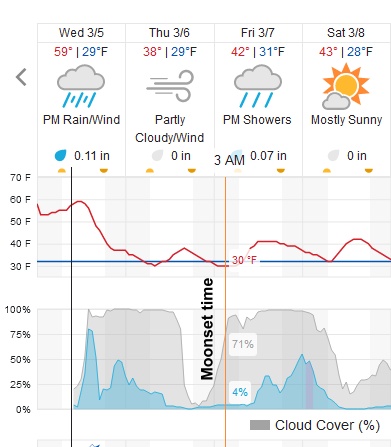
However, day-time moonrises mean night-time moonsets, and the Octagon is also aligned to those. A near (there's a slightly better one on April 3) northernmost lunistice moonset occurs early in the morning on the 7th. And, the current forecast is for clear (but clouding up) skies. The moonset should happen about 2:50 am, but of course the moon will be in the sky during the time before then (when the skies are clearer).
The moon, when in the sky, will be to the left (south) of the setting point, and head down at about a 45° angle to the right as it sets.
Let me discuss some of the possible viewing points.
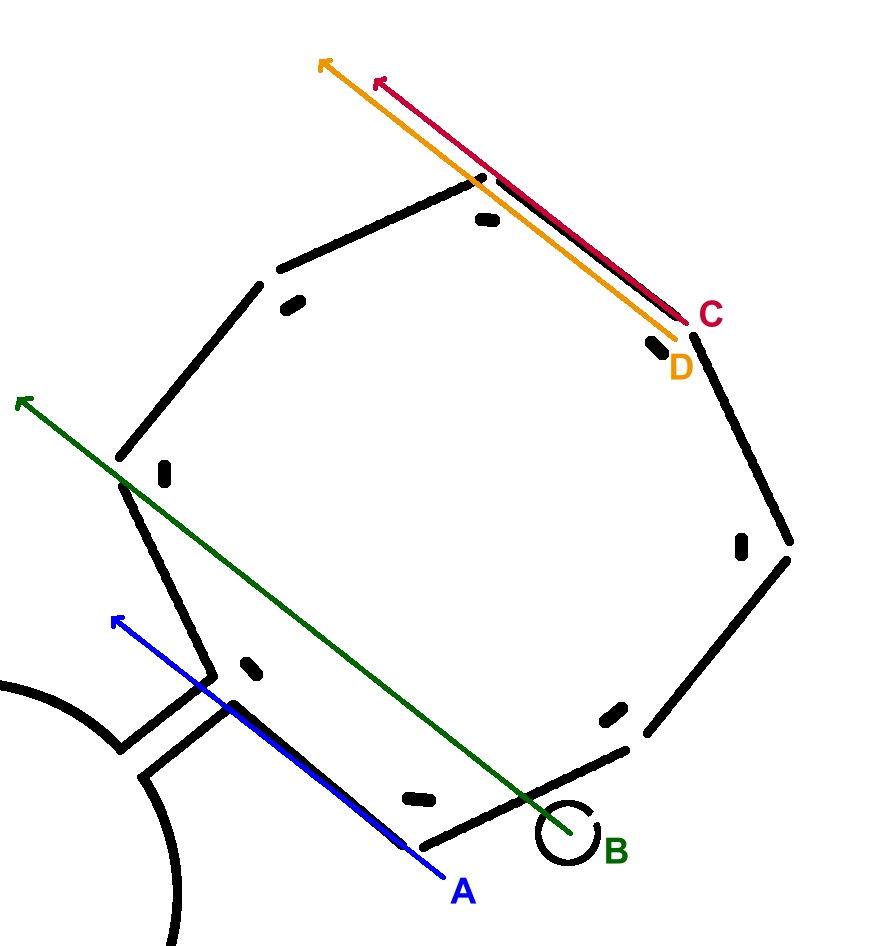
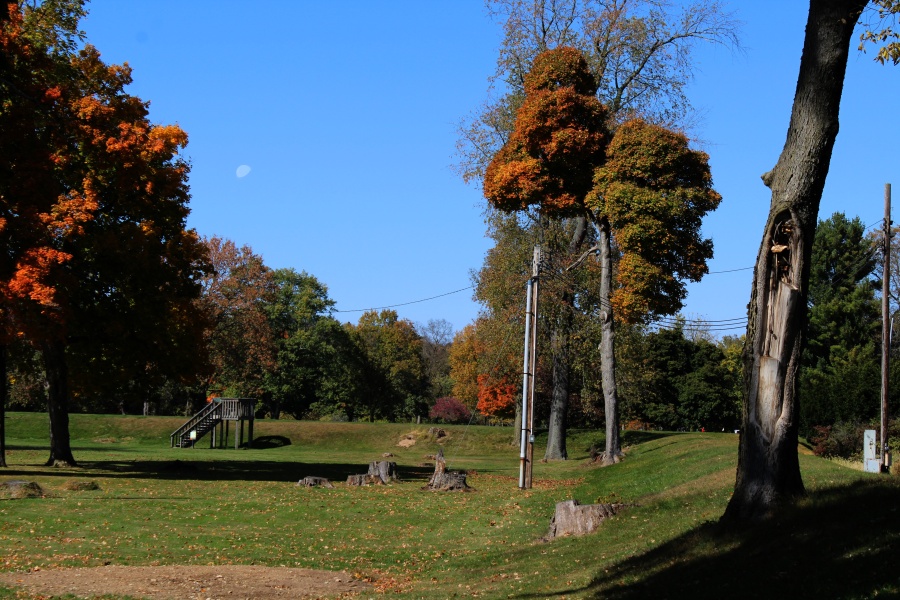
"C" (the red line) is the official alignment. Since it borders the property, this is pretty much a hedge, and there is little to see here. "A" (the blue line) is actually the southernmost moonrise alignment looking in the opposite direction. This is not a perfect alignment but it can serve as a decent proxy. In addition, "A" is right next to the parking lot. This picture shows a (day-time) moonset looking along the blue arrow from point "A" from back in 2022.
"B" (the green line) would be nice except for the evergreens along the fairway to the left of the line, which block most of the moonset. Finally, I rather like "D" (the orange line). It is framed by the officially aligned mound on the right and the entrance mounds on the left. There are a few trees, but they are deciduous. (That said, I have not recently carefully inspected that location, so I could be misremembering how good it might be.)
Again, before the moonset, the moon will be above and to the left (south) of the set point, and will head down and to the right.
PS. Officially, the grounds are only open during the day. I have no idea how the Ohio History Connection might react to viewers of this moonset.
03/07/2025.
The northernmost lunistice moonset was this morning at about 2:50am.
As I've said before, lunistice moonrises in the Spring take place mid-day. This time of year, it is the lunistice moonsets that occur at night and, to me, really inspire awe. It's a shame that the rest of the Octagon and the full lunar cycle are ignored. Let me discuss the experience.
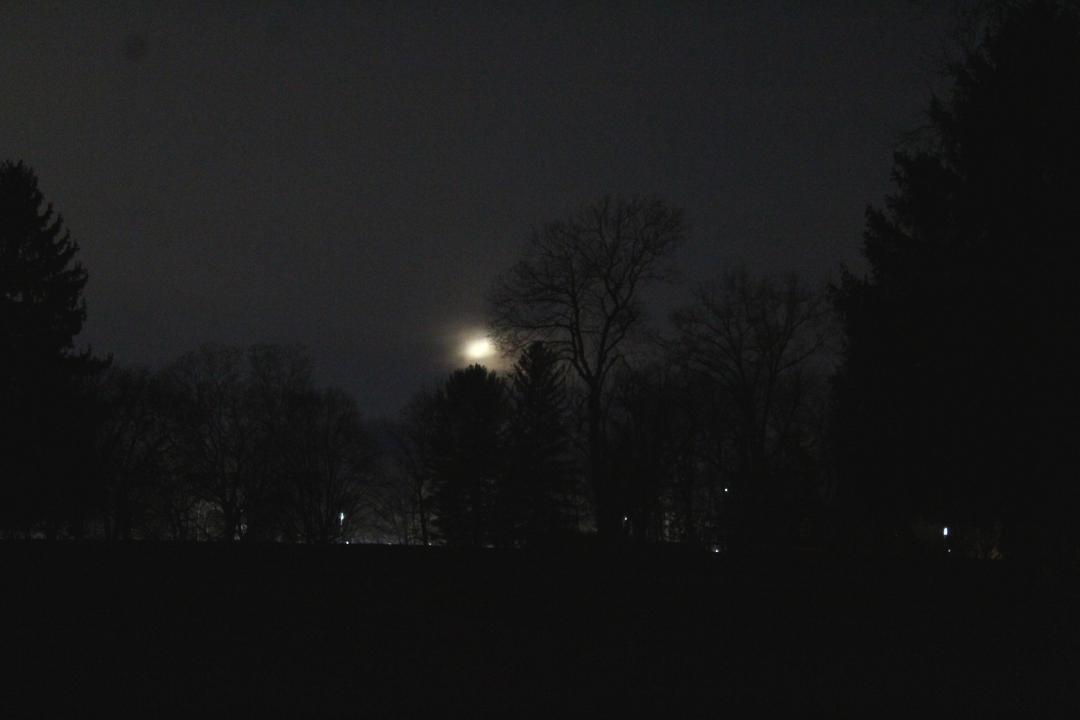
This is shortly before moonset. Clouds had been slowly drifting in from the west, so at moonset, the moonlight was wafting through the haze.
A cloud gap was predicted, as I noted on Wednesday.
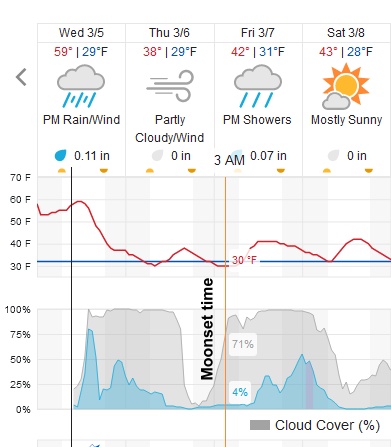
This was pretty much spot on. The sky was clear and the moon sparkled in its first quarter until around 2:00am, when the hazy clouds drifted in.
While, on Wednesday, I'd shown some possible viewing spots, none of them really worked. The southern ones near the parking lot were unviewable due to the powerful street light illuminating the parking lot. Up at the tip of the Octagon, I had hoped to stand just off the mound, but there was a large evergreen about 2/3 of the way down. You can see where it is (in green) here.
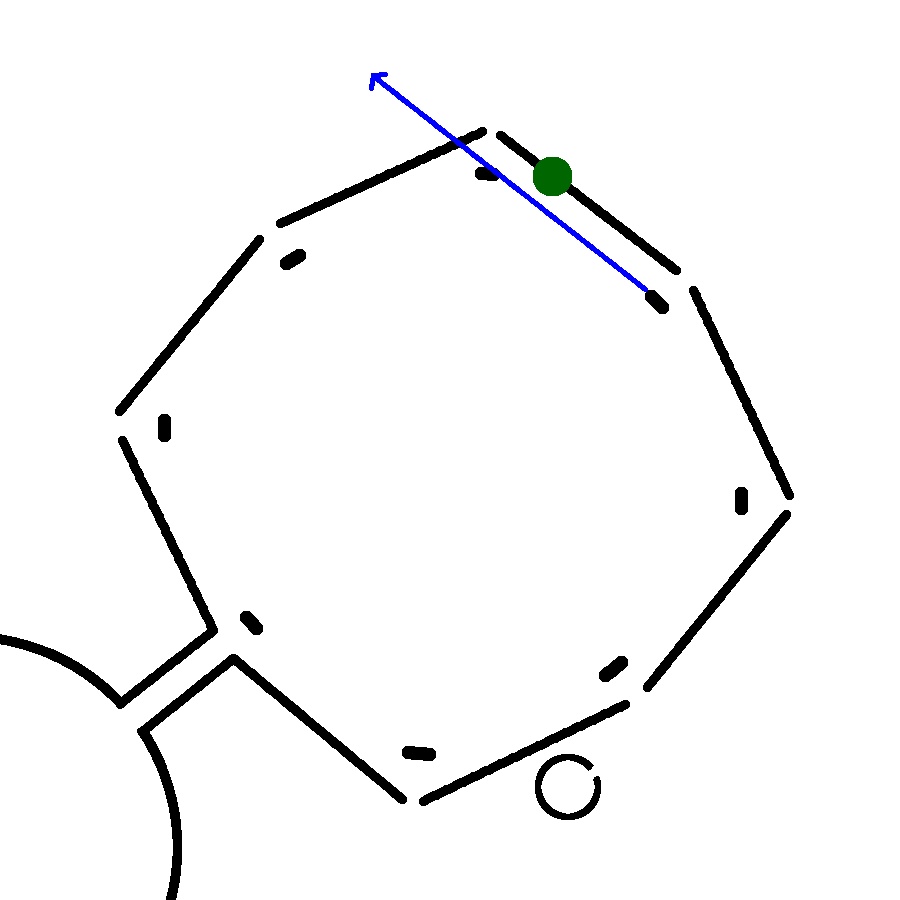
You can also see it as a dark spot to the right in the first picture.
I set up for watching the moonset on the edge of the guardian mound. The blue line is parallel to the edge mound of the Octagon and points towards the edge of that other guardian mound and the moonset.
That's not where the moon sets, though. Off to the northwest are the Welsh Hills, and they add about 1.8° of elevation. This picture shows the path of the moonset.
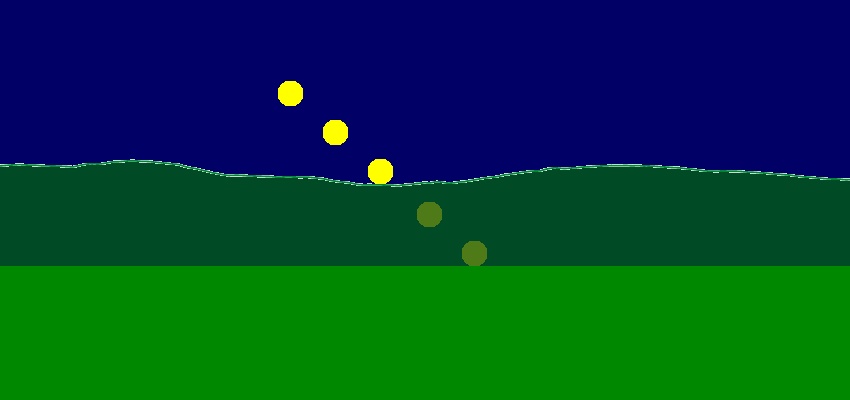
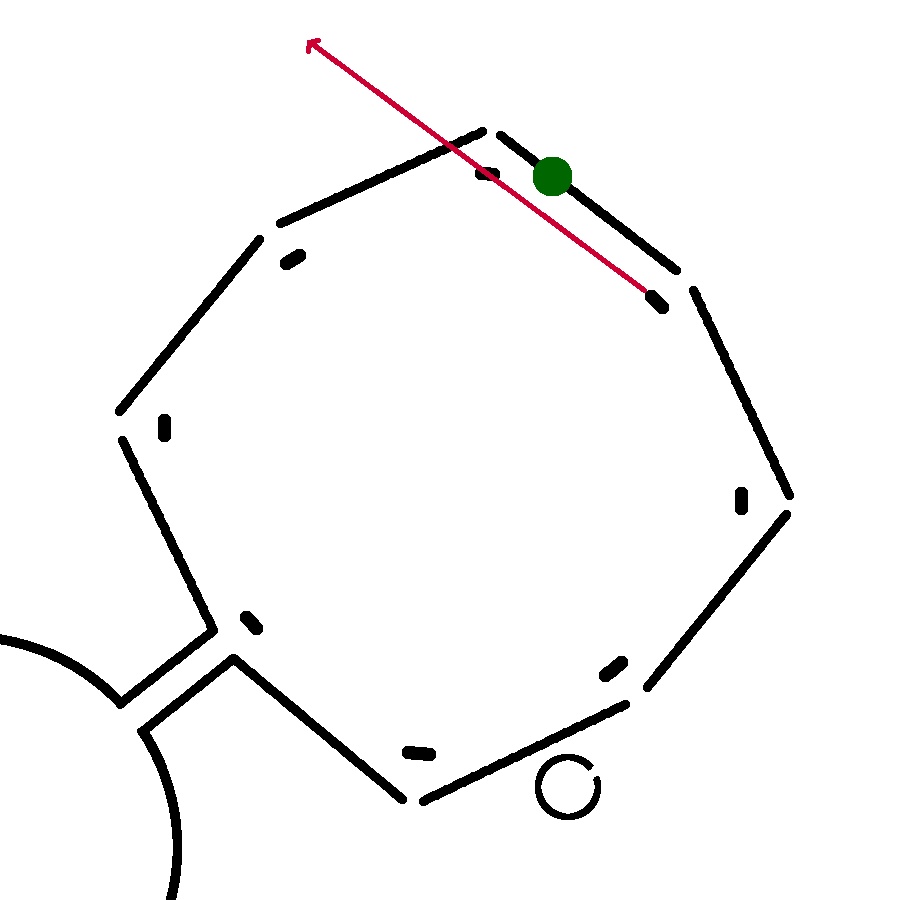
The darker line shows the hills, and the moon drops behind them. However, the Octagon points to where the moon would hit the level horizon (light green), say around Raccoon Creek. It is clear that this is what was important to the builders.
This pictures shows the adjusted moonset point (red line) adjusted to the horizon. This is what an observer would actually see.
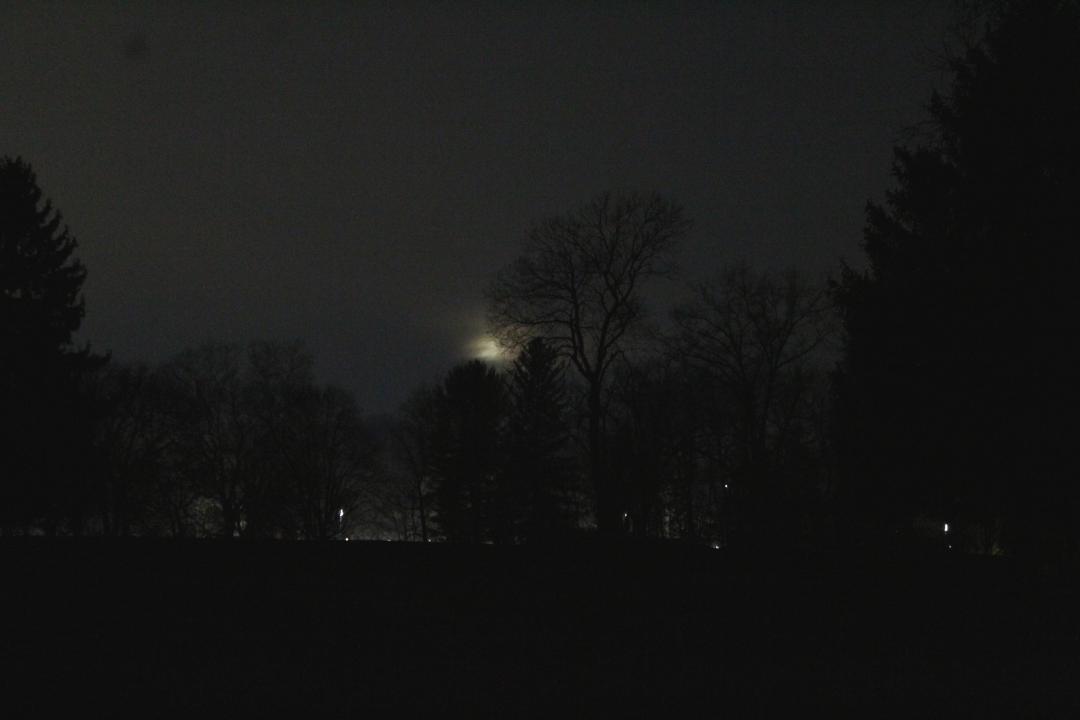
As the moon sunk lower, the sky got hazier and the moonlight spread out.
In addition, that location is a bit to the left/south (and a bit high) because there are trees on the hills blocking the moonlight.
And then the moon faded away.
I was left with a sense of completion. A sense of the completion of the lunar cycle. Completion with the essense of the cosmos. Of the presence of the oneness of the cosmos. And of oneness with the quintessence of those fellow humans who were here nearly two millennia ago.
Completion.
The Daytime Moonrise.
[This section added 08/26/2025 to describe what was seen at the Ohio History Connection's program.]
As predicted, the weather did not particularly cooperate. However, there was some clearing as the moon rose.
But also, as I had been predicting for a long time, there was nothing to see for much of the early moonrise. One just is not going to see a moon rising close to the horizon during the daytime. There is just too much in the air along the horizon for the moon to show up. It's not just modern polution—even the sort of water vapor that would have been present 2,000 years ago would prevent seeing the moon anywhere near the horizon.
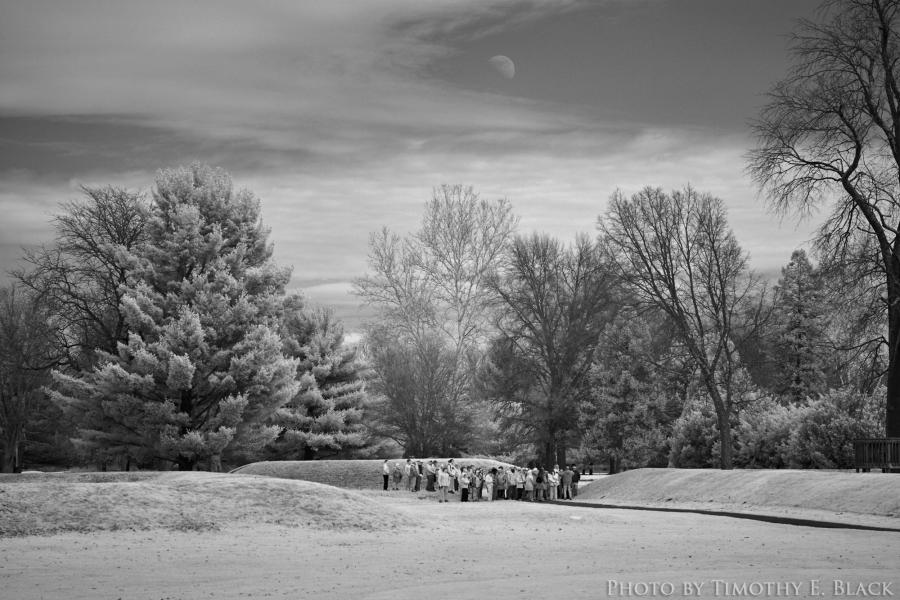
We do have a picture, though. Photographer extraordinaire Tim Black used his infrared camera and caught the moon, otherwise invisible, as it rose above the trees.